Resilience Skills
All parents want their children to be happy and successful. For this wish to come true, parents may teach children Resilience Skills – the ability to bounce back from stress, challenges, or trauma.
Take a look at the picture below to see what people may feel if they have low resilience skills:
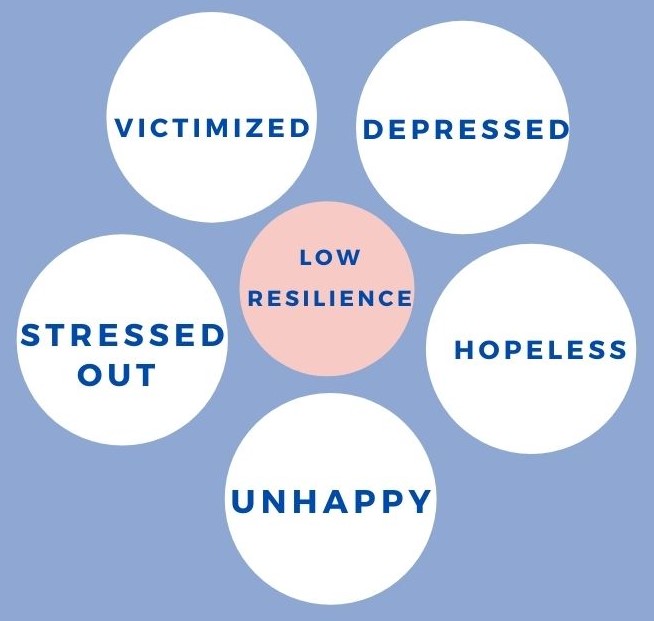
It is not a secret that we cannot prevent our children from adversity and daily stress, but we can teach them to be more resilient by changing how we think about challenges and adversities.
Resilient children are confident, curious, and adaptable.
They understand the feelings of others.
They are able to form meaningful relationships.
They are hopeful about the future.
Children reach their full potential.
They are able to cope with stress when they move home, change school, or pass exams.
There are 3 key elements for forming Resilience skills:
First, relationship with parents.
Second, expressing energy.
Third, Social and Emotional Support.
Happy Parenting Style
Loving and caring relationships with parents are a basis for developing resilience skills because children feel that they are loved and accepted. Children, having a strong family network, are able to build emotional connections with others and feel safe and secure for years. Moreover, when parents show strategies that help children calm down, focus their attention, and think optimistically, they naturally create an environment where children are able to self-regulate and make positive behavior choices.
Children love playing sports and games, and this is a natural way for developing resilience skills because physical exercises moderate depression and anxiety and help express energy. When parents encourage children to try new sports, they promote healthy risk-taking which is important for developing resilience skills. Playing board games is another way to teach children to control their impulses, take turns, and be flexible.
It is great when parents listen to children actively and share strategies on how to identify and find possible solutions. For example, some children have difficulties making friends. Parents may encourage children to imagine some ways how to join others at a playground. Children who have strong social and emotional support feel confident and respected.
Adults who strengthen resilience skills in themselves can better model healthy behavior for their children. There are ways for building resilience skills for adults:
Get knowledge about resilience.
Focus on managing emotions.
Have the opportunities for a personal challenge.
Focus on autonomy and responsibility.
Have a supportive relationship.
Techniques that help children form resilience skills: